
‘Hear My Story: On Laziness and Productivity’ - A Creative Writing Workshop
Workshop at a glance
What does it mean to be ‘lazy’ or ‘productive’? Who defines these concepts? And how do expectations about productivity shape the way we see ourselves and others?
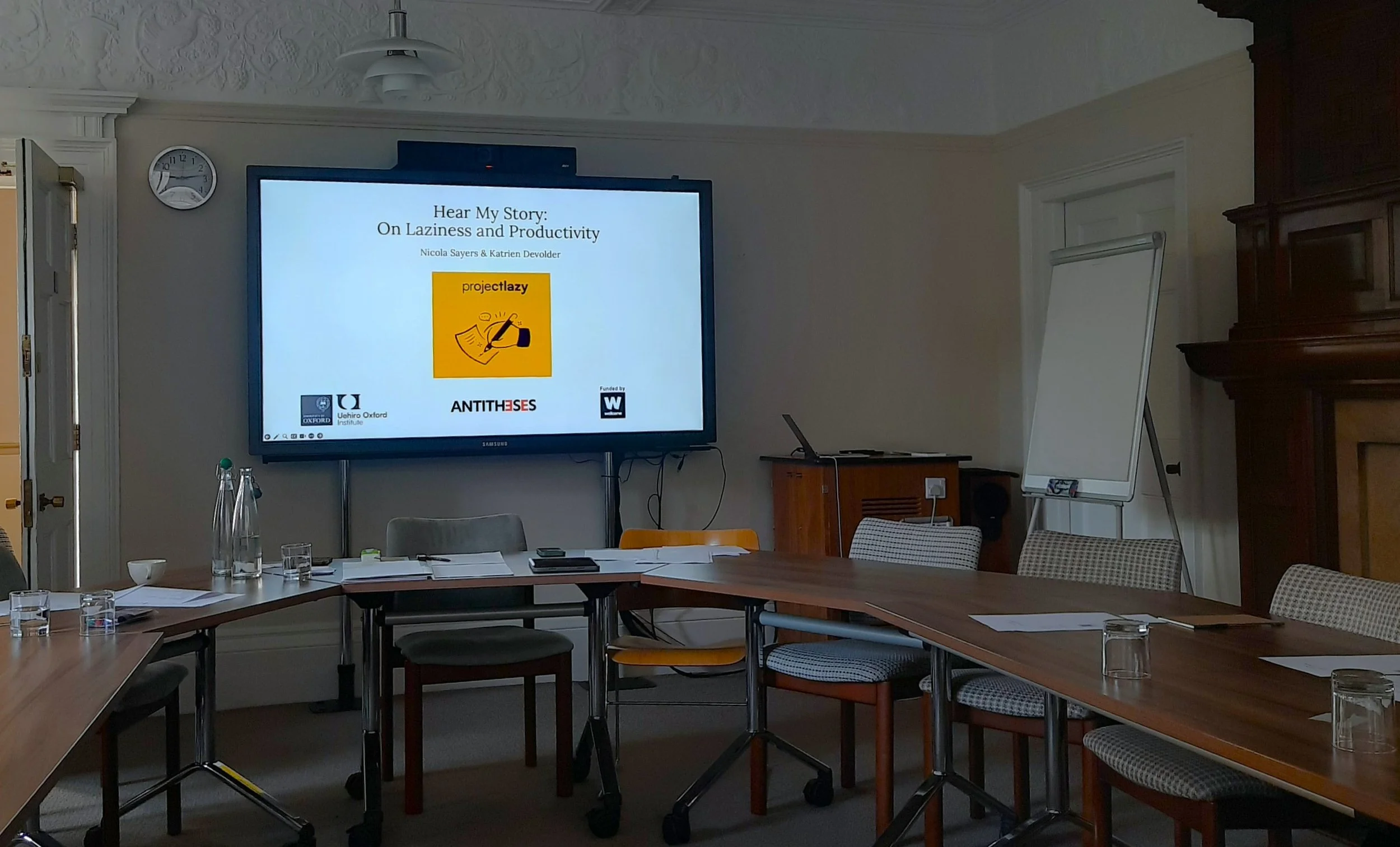
These questions were at the heart of a creative writing workshop held on 22 April 2026. Led by writer Nicola Sayers and Professor Katrien Devolder from the Uehiro Oxford Institute, the workshop invited participants to reflect on how laziness and productivity are experienced, felt, imposed and, at times, resisted in everyday life.
Through creative writing and storytelling exercises, participants explored assumptions and values that shape how we think about work, productivity and worth. They shared personal experiences, listened to one another's stories, and engaged in thoughtful, respectful dialogue.
For a glimpse of the workshop, please read on:
Activity 1: Introduction through experiences
The workshop began with a simple question: Where or when do you feel most like yourself? The aim was to move away from standard introductions through jobs, qualifications or achievements. Participants shared places, activities and moments that mattered to them. Answers ranged from time spent in nature and creative pursuits to moments with family and friends.
This opening activity set the tone for the rest of the workshop. It invited participants to see themselves and one another beyond the lens of productivity, focusing instead on what they value. This helped create an atmosphere of openness, trust and curiosity.
Activity 2: Discussing quotes about productivity and laziness
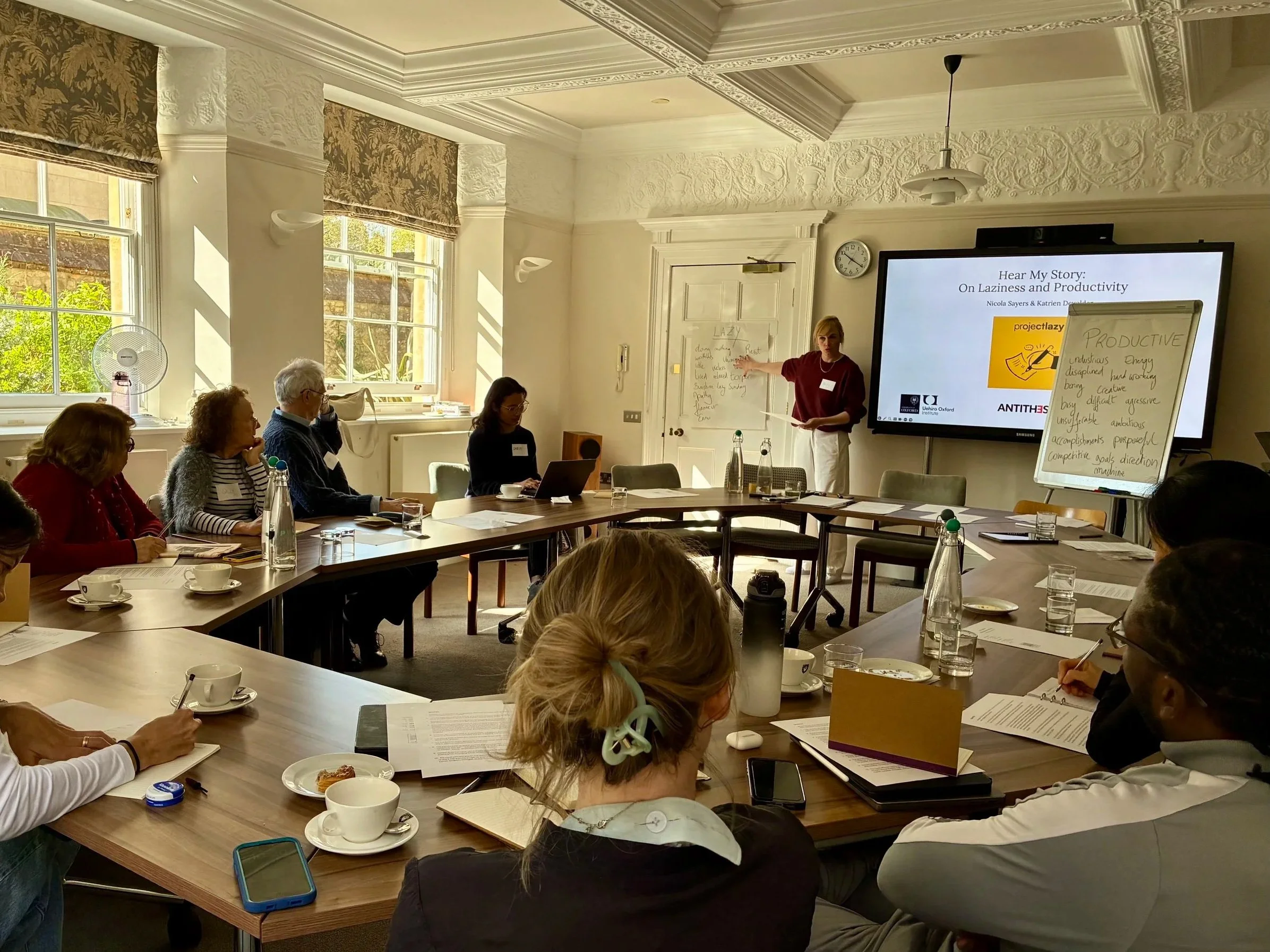
Participants engaged with quotes related to work, productivity, worth, and time. These ranged from quotes by Aesop and Lao Tzu to Oprah Winfrey and Stephen King.
-
“Amateurs sit and wait for inspiration. The rest of us just get up and go to work.” - Stephen King, novelist
“Productiveness is your acceptance of morality, your recognition of the fact that you choose to live. “- Ayn Rand, writer and philosopher.
“Culture, as I understand it, is essentially a product of leisure. The art of culture is therefore essentially the art of loafing.” - Lin Yutand, Author.
“The grasshopper laughed, partied and mocked her – “why work so hard? Tomorrow, you die” – but when winter came the grasshopper had no food, no shelter.” - Aesop, storyteller (Ancient Greece).
“Nature does not hurry, yet everything is accomplished” - Lao Tzu, philosopher, founding father of Taoism.
“The most efficient way to live reasonably is every morning to make a plan of one’s day and every night to examine the results obtained.” - Alexis Carrel, surgeon, biologist, Nobel Prize winner (1912).
The discussion revealed that reactions to these quotes were varied and sometimes conflicted. Some participants found resonance in ideas about discipline and effort, while others resisted what felt like moralising, overly simplistic or mistaken views on productivity and laziness.
Activity 3: What do ‘Lazy’ and ‘Productive’ mean to us?
The next activity began with a simple exercise: What comes to mind when you hear the words ‘lazy’ and ‘productive’?
It was made clear that they did not have to agree that the words that came to mind actually related to lazy and productive.
This is what participants shared:
Interestingly, it was noted that some of the words fit in both ‘word buckets’.
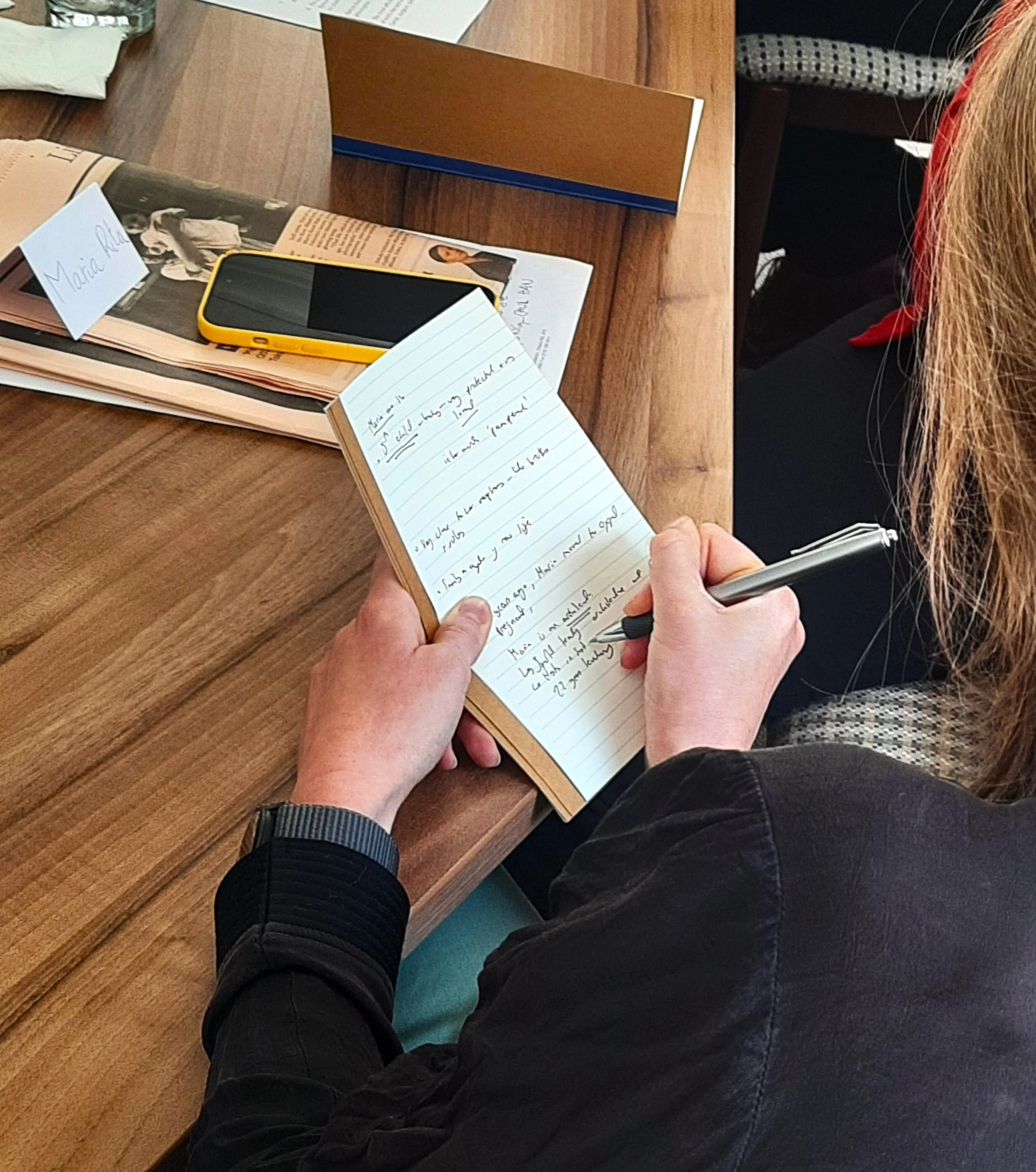
Participants were then invited to revisit a memory where they had either felt, or had been judged as lazy or productive. Writing in the present tense and focusing on the setting, atmosphere, and sensory details, they were prompted to describe their experience.
The stories highlighted how the meaning of laziness and productivity are rarely straightforward. Productive could be associated with fulfilment and achievement, but also with pressure, competition, and even aggression. Lazy could evoke guilt and judgment, but also softness, rest, pleasure, and resistance. This exercise revealed that both concepts are understood in a variety of ways, and are shaped by personal experience, context, social expectations, and what we value.
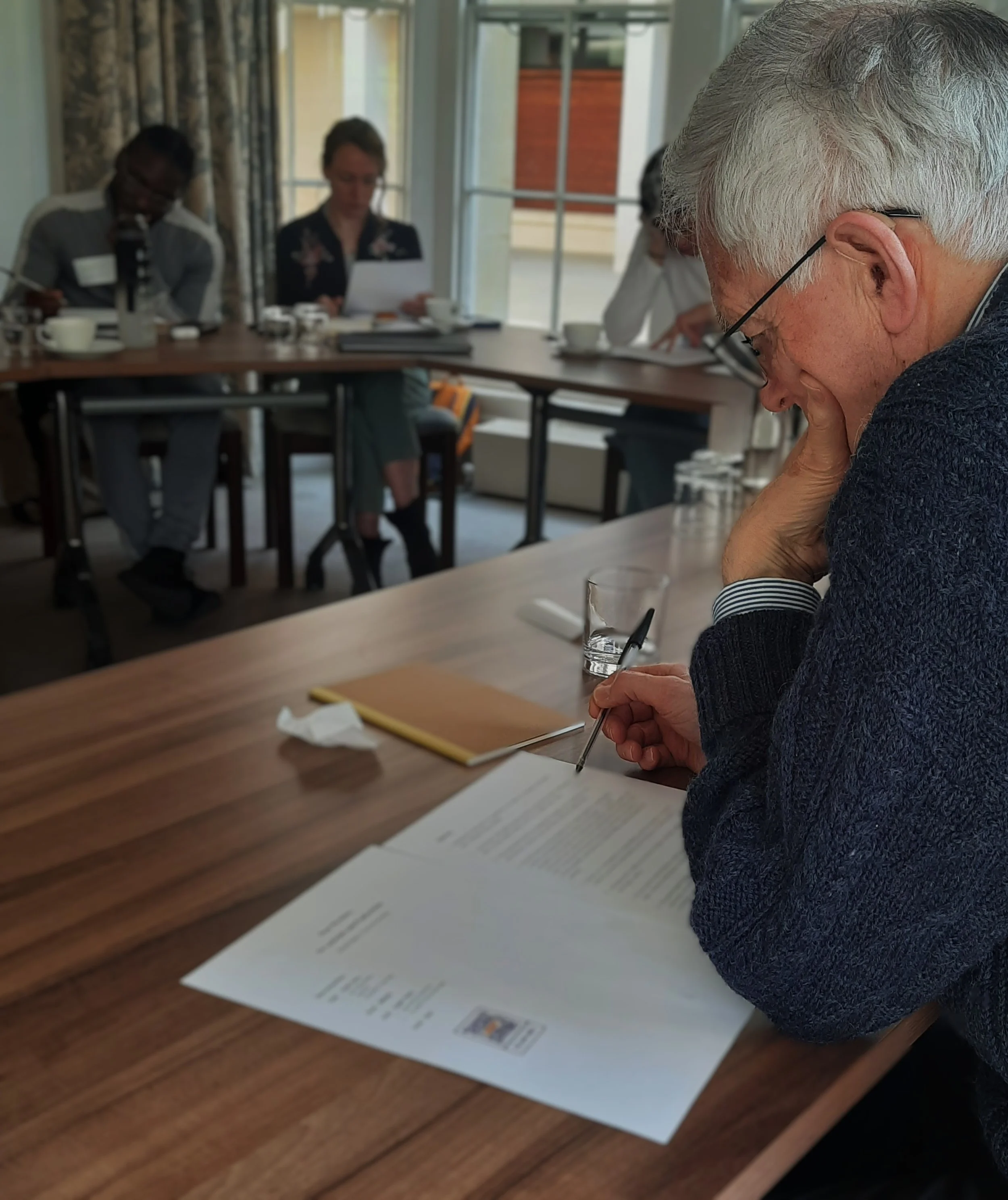
Activity 4: Listening across differences
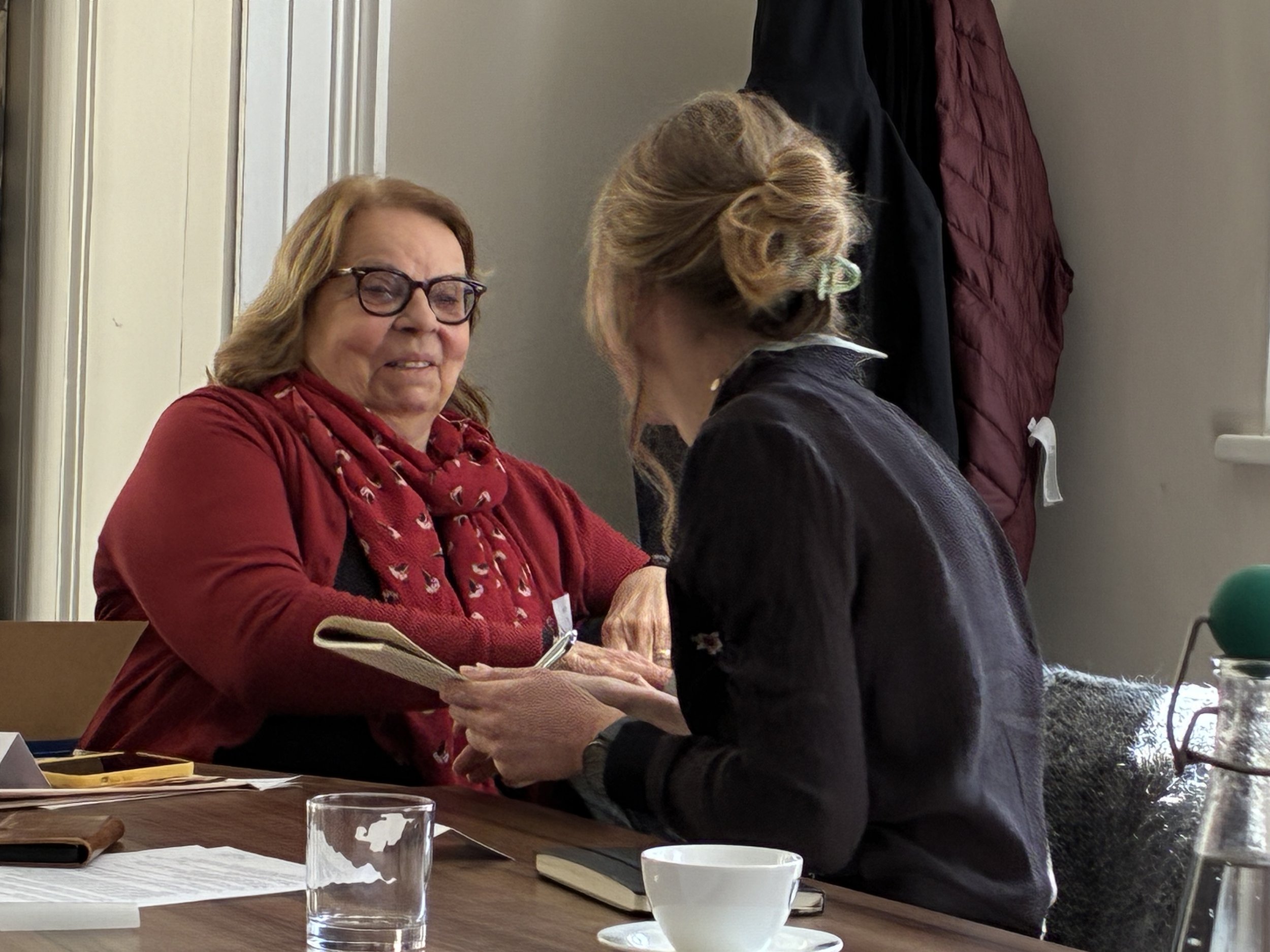
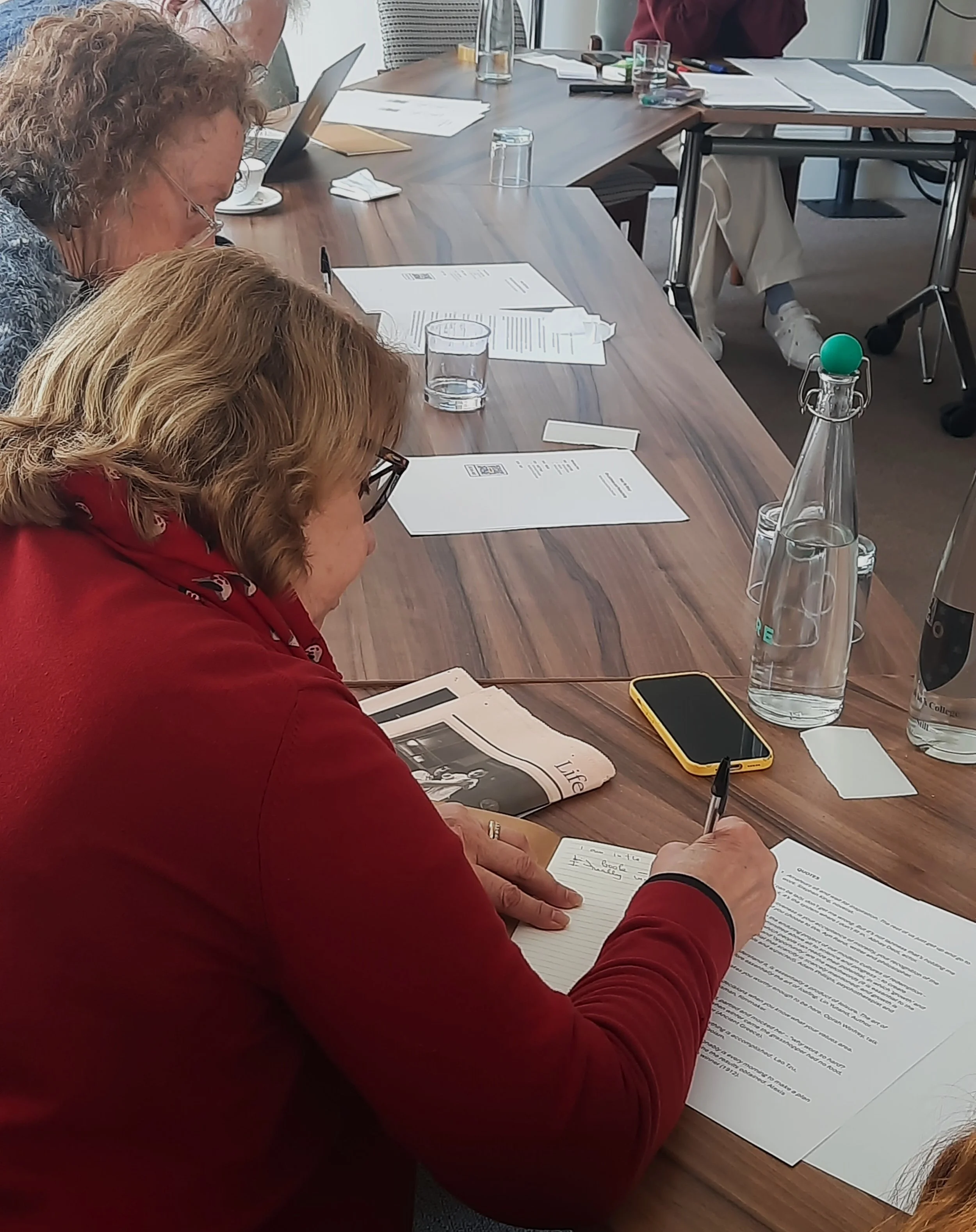
Participants were paired with someone from a different age or background and invited to interview each other using prompts—some developed by the workshop organisers and others contributed by participants—about work, productivity, time, rest, and fulfilment in their lives. They listened to another person's story before sharing their partner’s story with the group.
The exercise shifted the focus from speaking about oneself to listening closely to someone else, and enabled reflection on the different views on what makes life meaningful, and what counts as a valuable contribution to society.
The conversations challenged conventional ideas about productivity and contribution.
Whose contribution is more valuable: that of an artist or a doctor? Click to explore more Click to close
An artist reflected
“…the guilt that comes with laziness. I don’t feel guilty when it’s only affecting me, but when it comes to affecting people… it starts to feel like a problem. Maybe I should have become a doctor. That feels very specific, that I am saving lives. But when I say I am going to choreograph a dance, it feels different. Could I be using my skills in a better way for society?”
A doctor responded
“My life is immensely enhanced by modern art, music and dance. The idea of saving lives being more valuable than dancing just doesn’t resonate with me at all. Life is much more than that.”
Another participant added
“One career path aids the other. Doctors don’t have to think about choreographing and can simply watch your show to relax, so that they can continue saving lives. These are two parts of society, and we need both.”
“The community is what matters.” Participant Click to explore more Click to close
“I don’t think either productive or lazy is a good label. There is no value in either. The main value I find is in community. It doesn’t matter whether one is lazy or productive; everyone deserves a good life. For me, it is about how much good you contribute to society.”
Undervalued contributions Click to explore more Click to close
Care work, motherhood, and community labour were repeatedly described as undervalued or overlooked.
“The experience of being a mother has been most challenging. When balancing motherhood with other responsibilities, I found myself constantly apologising to people for not doing things a certain way. But motherhood was my biggest responsibility, and I was probably doing great at it. Why, then, was I made to feel like I was not being productive in my work while being a mother?”
Participant
Some participants reflected on whether the labels lazy and productive merely reflect societal expectations and values:
“No one is inherently either. It is only a function of the society we live in. The words can be arbitrarily used and moved around.”
Participant
Activity 5: Imagining Another Life
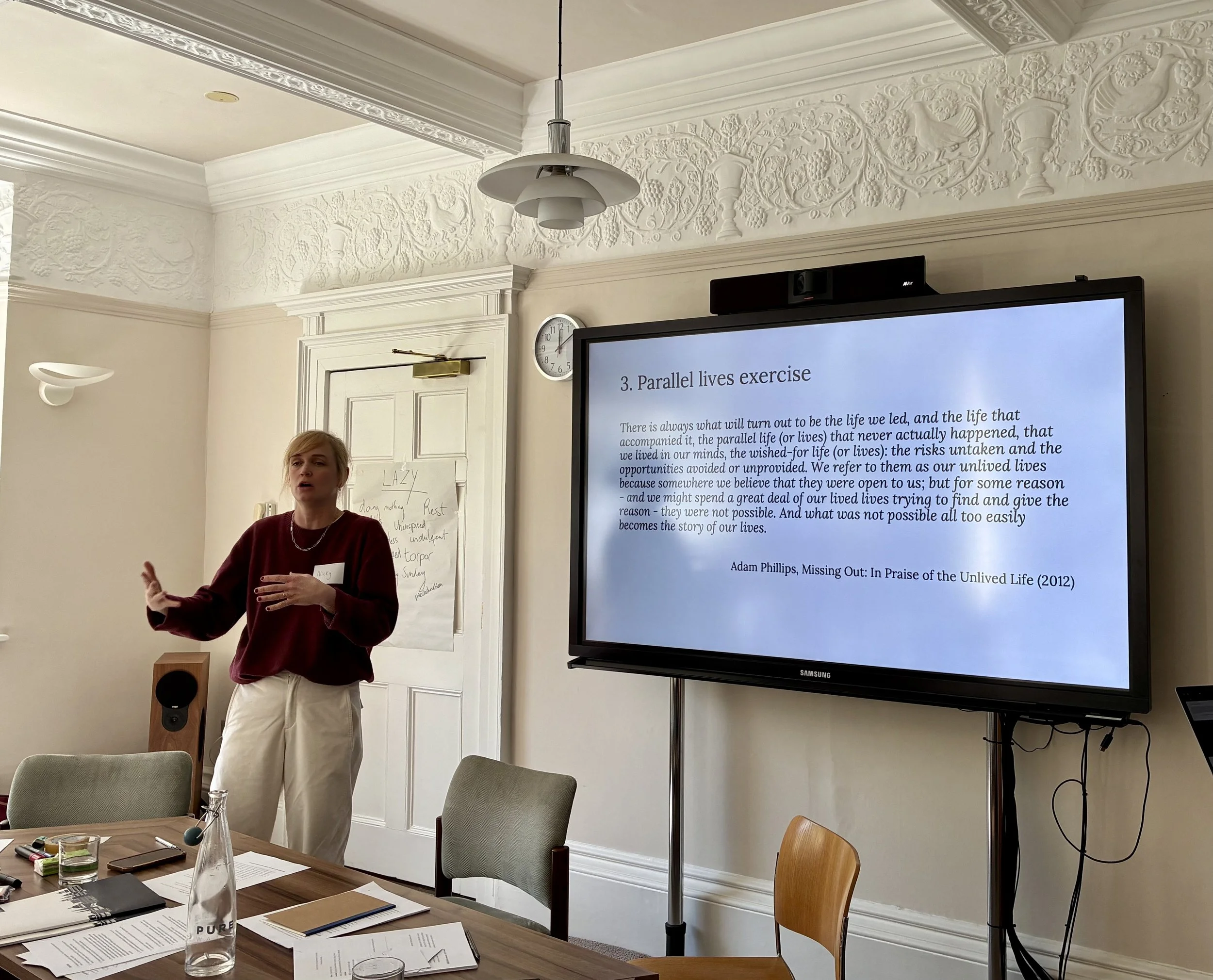
For the final exercise, participants were invited to imagine a different version of their lives—a life they have not lived, or one that might still be possible.
It was striking that many participants imagined alternative lives that they felt were more closely aligned with their values than the lives they currently lead. Some placed creativity and care at the centre of these lives. Others reflected on the choices they had made so far and the values they hoped would shape the years ahead. The exercise invited participants to reconsider what a meaningful life might look like beyond conventional ideas of success and productivity.
Throughout the workshop, creative writing, storytelling, careful listening and structured discussions encouraged participants to pause, reflect and question assumptions and ideas about laziness, productivity, and the values that underpin them. Rather than arriving at a single definition of laziness or productivity, the workshop revealed that these concepts are understood and used in a variety of ways, and that our views are shaped by our experiences, individual values, and the social context in which people live.
The workshop showed that conversations about laziness are rarely just about ‘how hard one tries’. They are also conversations about identity, belonging, community, recognition, care and what it means to live a good life.
This workshop was funded by the ANTITHESES platform of the Arts, Health and Ethics Collective (AHEC), and developed and led by:
Nicola Sayers: teaches creative writing at Syracuse University's London campus. Her writings— fiction and nonfiction—have been published in Public Books, 3quarksdaily.com, Porridge Magazine, and Public Seminar. She holds a PhD from the University of London, an M.A. in Psychology from NYU and a B.A. in Philosophy, Politics and Economics from the University of Oxford.
Katrien Devolder: is Professor of Applied Ethics at the University of Oxford, Director of Public Philosophy at the Uehiro Oxford Institute, and a Fellow at Reuben College. She is the project lead for Project Lazy.